Alliteration Activity with Free Printable (Preschool & Kindergarten)
This free printable alliteration activity has helped me teach my 3 year old son his beginning sounds so quickly! It’s fun for him, easy for me, and I know he is building real pre-reading skills that will help him learn to read. Best of all, it’s free and just one click away!
Below you’ll find a quick explanation of alliteration and why it matters, exactly what’s in the printable, how to use it with your whole class or a small group, and simple ways to make it easier or harder for the kids in front of you.
What Is Alliteration? (And Why It Matters for Young Readers)
Alliteration is when two or more words close together begin with the same sound, like “scary skeleton” or “positively perfect pizza.” It is about sound, not spelling, so “Kate’s cat” counts but “Charlie’s cake” does not. An alliteration activity helps preschoolers notice beginning sounds, an early phonological awareness skill that prepares them for phonics.
When preschoolers hear alliteration, it draws their attention to the repeating beginning sound. Hearing alliteration builds their phonological awareness, which is the ability to notice and play with the sounds in spoken language: words, syllables, rhymes, and the individual sounds inside words. It all happens by ear, no letters required. Alliteration specifically tunes children in to the first sound of a word, which later helps them connect sounds to written letters (that’s phonics). If you want the bigger picture, here’s why phonological awareness is so important for early readers.
I have found that preschool-aged children really enjoy alliteration because they connect beginning sounds so closely with words they know, especially the sound at the start of their own name.
What’s Included in This Free Alliteration Activity Printable
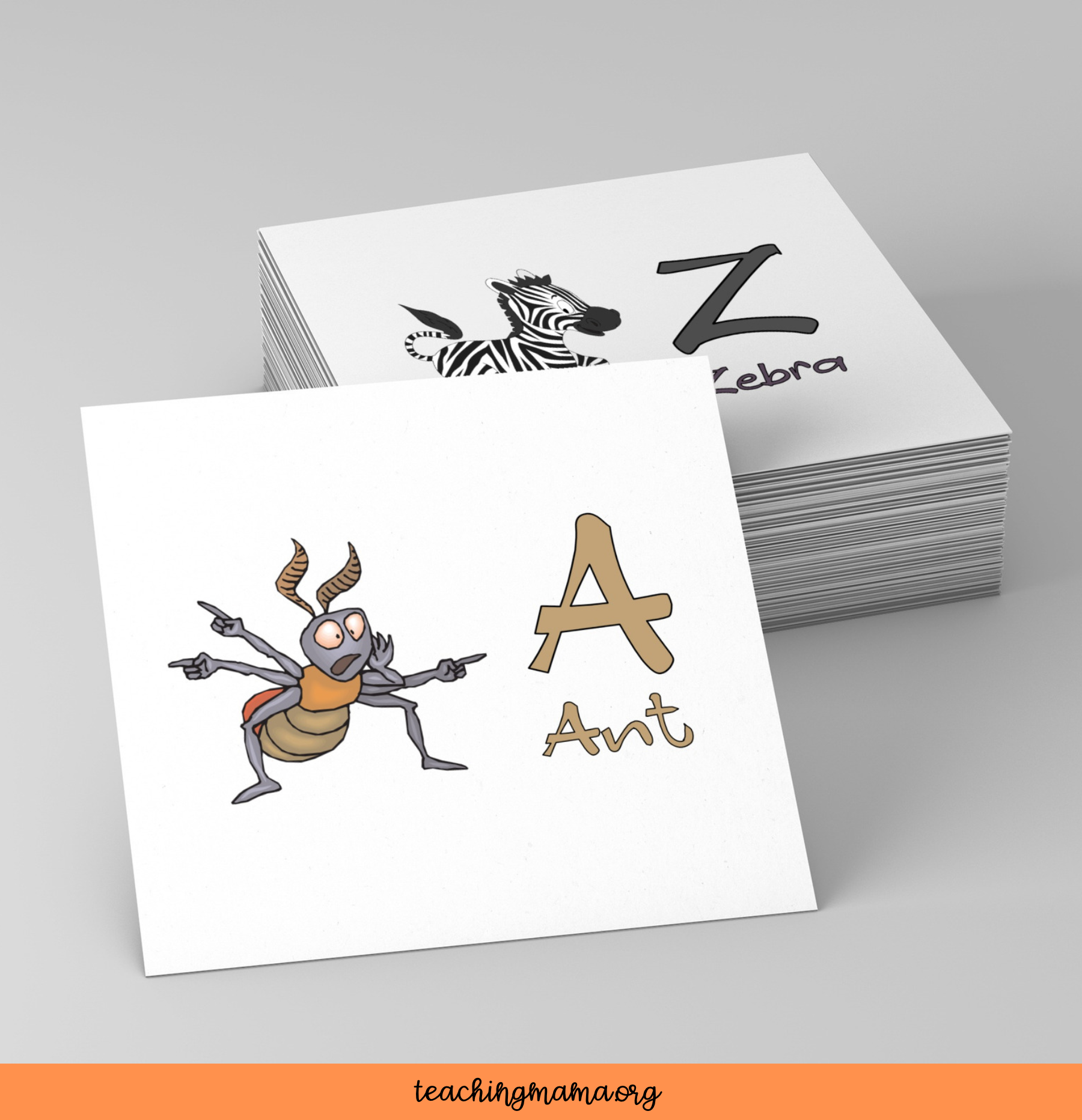
In this free literacy printable for preschoolers, you’ll find number sets of picture sorting cards covering a variety of beginning sounds. Most of the sets use consonant sounds, and every match is chosen by sound, not just by letter. That means you won’t see “cat” paired with “circle” (same letter, different sounds) or “phone” paired with “pig” (different first sounds, even though “phone” doesn’t start with F).
Some vowel sets are included as well. We took careful consideration to make sure the words beginning with vowels share the same sound so your preschoolers can easily identify them. “Icky igloo” works because both words start with the short /i/ sound, while “icky ice cream” would be trickier because “ice cream” begins with the long /i/ sound.
The format is simple picture sorting cards, so it’s as easy as printing, cutting, and bringing them to your classroom or kitchen table.
What You’ll Need
- The free alliteration printable
- Cardstock (it holds up much better than printer paper for little hands)
- Scissors or a paper cutter
- Optional: a laminator, so you can reuse the cards year after year
- Optional: sticky notes and a marker for the advanced extension below
How to Use the Alliteration Activity
What I love about printables like this alliteration printable is that they move easily from a whole group activity to a small group activity.
Whole Group Introduction
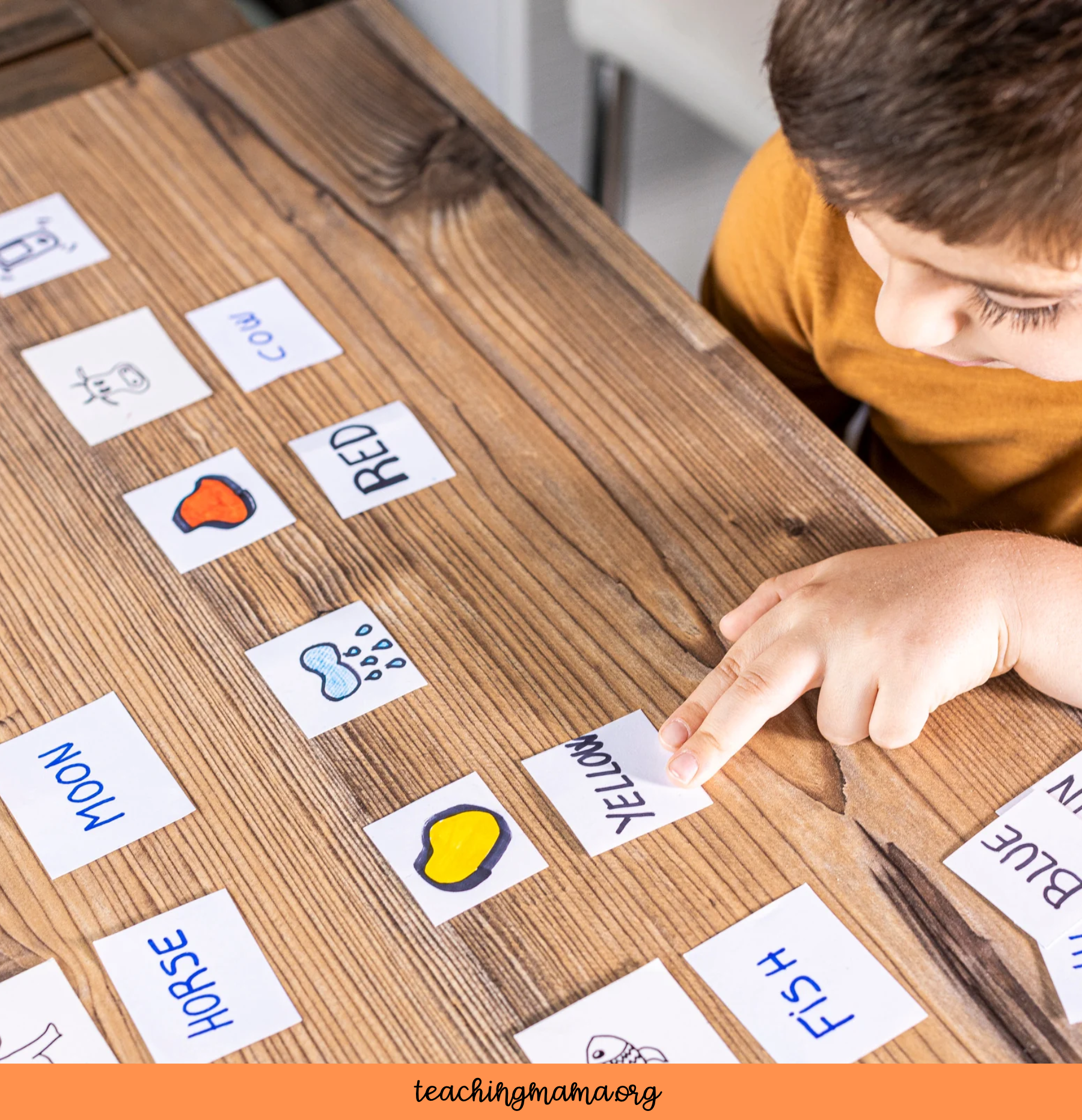
Introducing the idea of alliteration to your whole class as a short group activity gets your preschoolers excited to see more. Hold up one card and ask the children what they see on the card. Emphasize the starting sound of that word, and ask if they can hear what that sound is. Next, show the group three cards and identify together which of the three start with the same sound, before releasing them to work on this activity in small groups. This alliteration activity could be a great exit ticket for the end of the day as well.
Small Group or Literacy Center Work
In small groups or at your literacy center, you’ll have more focused time to work on phonological awareness with your preschoolers. Create a challenge: can we stack all of the cards? When a student correctly identifies an alliteration match, stack them up. Once you’ve worked through all of the cards, celebrate how much you’ve learned by admiring how high your stack of cards has gotten.
Have children say both words out loud before they decide on a match. Saying “bear… ball” together helps them hear the sound instead of guessing from the pictures.
Tips for Differentiating This Activity
When you introduce this to your classroom, you may notice that some children understand alliteration almost immediately, while others need more support to develop their phonological awareness. For preschool-aged children, this level of variability is very typical. To support and extend this activity, try the following tips.
For Younger or Beginning Learners
- Include a visual of the letter for each alliteration sound. Having the written letter present can help children who are struggling to make the match by sound alone.
- Stretch the first sound of each card in an exaggerated voice. Sounds like /m/, /s/, and /f/ can be held (“mmmmoon”), while sounds like /b/, /k/, and /t/ can’t be stretched, so bounce them quickly instead (“b-b-ball”). Take your time to point to the shape your mouth is making, and repeat the first sound together as a small group.
- Because young children feel so connected to the sound that begins their name, consider including pictures of your preschoolers for alliteration practice. Just match by sound: “Kate’s kite” works, but “Charlie’s car” doesn’t, because Charlie starts with /ch/.
For Advanced Learners
- Write letters on sticky notes, and challenge your preschoolers to match each card to the letter that spells its beginning sound. Choose words with predictable spellings for this one, since some sounds (like /k/ in “cat” and “kite”) can be spelled more than one way.
- Create your own alliteration examples! Extend each card by asking for another word that begins with that same sound. You can also play I Spy around the room using alliteration (for example, “I spy something that starts with the same sound as kite”). For more on-the-go ideas, try these early literacy games you can play anywhere.
- For very advanced learners, encourage them to dictate a story that uses as much alliteration as they can.
More Free Phonological Awareness Activities
Once your kids are hearing matching beginning sounds, they’re ready to connect those sounds to letters. This hands-on beginning sounds matching activity and these alphabet wheels for beginning sounds are great next steps. For another phonological awareness skill, try this rhyme time packet for preschoolers.
For more free printables, grab these printable alphabet booklets. To never miss another printable, and to have exclusive access to a library full of resources, join our Printables Club!
Frequently Asked Questions
Most children can start hearing matching beginning sounds around ages 3 to 4, which makes this a good fit for preschool and pre-K. Kindergarteners can use the same cards with the letter-matching extension. If a child isn’t hearing the matches yet, that’s normal at this age; keep the activity playful and come back to it in a few weeks.
Phonological awareness is the big umbrella: hearing and playing with words, syllables, rhymes, and beginning sounds. Phonemic awareness is the most advanced part of it, where children hear and work with each individual sound (phoneme) in a word, like blending /c/ /a/ /t/ into “cat.” Noticing that two words start with the same sound is an early step toward phonemic awareness.
Alliteration focuses on the beginning of words (“big bear”), while rhyming focuses on the ending (“cat, hat”). Both are phonological awareness skills, and many children pick up one before the other. Practicing both gives kids two different ways to listen closely to words.
Yes. “Ship” and “shoe” both start with the /sh/ sound, even though that sound is spelled with two letters. “Snake” and “sun” both start with /s/, so they alliterate too. Just avoid pairing words like “ship” and “sun,” which share a first letter but not a first sound.
Absolutely. At home, play a quick round at the kitchen table, or hide a few cards around the room and have your child find the pairs. Five minutes a few times a week is plenty for preschoolers, and you can add family names (“Mommy’s muffin,” “Daddy’s dog”) to make it personal.
Give It a Try!
Print the cards, pick a handful of sounds, and see which matches your kids spot first. I’d love to hear the silliest alliteration your little ones come up with, so share it in the comments!