Creating a Daily Learning Schedule for Preschoolers
Creating a learning schedule for preschoolers can feel overwhelming. There are learning activities, play, meals, transitions, outdoor time, cleanup, and all of those little moments that make up a preschool day.
But here’s the thing: you don’t need to plan every minute of your preschooler’s day.
A good preschool learning schedule is less about following a strict timeline and more about creating a predictable rhythm. Children know what to expect, while you still have the flexibility to slow down, move on, or change your plans when the day doesn’t go exactly as expected.
The goal is to create a day that includes learning, play, movement, independence, and quiet time without making children feel like they’re moving from one activity to the next all day long.
Why Is a Daily Learning Schedule for Preschoolers Important?
Preschoolers thrive on routines. When children know what is coming next, transitions can become easier and they can begin to take more ownership of their day.
A consistent routine also gives children repeated opportunities to practice important skills. They learn how to clean up, wait for a turn, listen to directions, make choices, participate in a group, and move from one activity to another.
A learning schedule for preschoolers can help children:
- Practice independence
- Build early academic skills
- Develop listening and attention skills
- Become comfortable with daily expectations
- Practice transitioning between activities
- Make choices and take responsibility
- Feel more confident throughout the day
A schedule is helpful for adults, too. Instead of constantly wondering what to do next, you have a plan to guide your day. Think of your schedule as a framework, not a checklist.
You should be able to look at your schedule and know what comes next without feeling like you’ve failed if something takes longer than expected.
What Makes a Good Preschool Learning Schedule?
Every preschool schedule will look different. A classroom, daycare, homeschool setting, and preschool-at-home routine may all have different needs.
However, a well-balanced preschool schedule usually includes a combination of:
- Structured learning activities
- Child-led play
- Small- and whole-group activities
- Movement and outdoor play
- Art and hands-on exploration
- Snack and meal times
- Quiet or rest time
- Opportunities for independence
- Transitions and cleanup
Preschoolers don’t need to sit and complete structured activities all day to be learning. Some of the most valuable learning can happen when children are playing, exploring, talking, building, creating, and making choices.
Use Flexible Time Blocks
One of the biggest mistakes you can make when creating a preschool schedule is trying to plan every activity down to the minute.
Preschoolers need structure, but they also need flexibility. Sometimes an activity you expected to take a few minutes becomes a wonderful opportunity for conversation and exploration. Other times, an activity simply isn’t working and needs to be shortened.
Instead of creating a rigid timeline, think about your day in flexible blocks.
For example:
Morning: Greeting, morning meeting, songs, read-aloud, and a learning activity
Midday: Snack, centers, hands-on exploration, and outdoor or large-motor play
Afternoon: Art, sensory play, quiet time, read-aloud, and free play
This gives children the predictability they need while giving you room to follow their interests and needs.
Include Intentional Learning Activities
A balanced learning schedule for preschoolers should include intentional learning experiences. These are activities where you have a specific skill or concept in mind.
Learning activities might include:
- Letter and sound activities
- Name-writing practice
- Counting games and math manipulatives
- Sorting and patterning
- Science exploration
- Art projects
- Fine motor activities
- Read-alouds
- Songs and fingerplays
A simple counting game with buttons, a name-writing activity at the table, or a science experiment with water can provide meaningful learning without requiring a lot of preparation.
And remember, short, engaging learning experiences are often more effective than trying to stretch an activity longer than children are ready for.
Make Room for Play
Play needs to be part of your preschool schedule, not something children get to do only after the “real learning” is finished.
Dramatic play gives children opportunities to practice language, communication, problem-solving, and social skills. Building with blocks encourages planning, creativity, and spatial awareness. Sensory play can support fine motor development, language, and exploration.
When creating your schedule, think about where children will have opportunities to:
- Pretend
- Build
- Create
- Explore
- Solve problems
- Talk with others
- Make choices
- Use their imagination
You don’t need to turn every play experience into a teacher-directed lesson. Sometimes the best thing you can do is provide the materials and give children time to explore them.
Try some of my favorite play-based activities for more ideas.
Tips for Creating a Learning Schedule for Preschoolers
Creating a schedule does not have to be complicated. These tips can help you create a routine that works for your classroom or home.
And remember, you know your preschoolers best. What works for one classroom or home might not work for another, and that’s okay!
Start With Your Existing Routine
Begin with the parts of your day that already happen consistently.
Think about:
- Meal and snack times
- Arrival or morning routines
- Rest or quiet time
- Outdoor play
- Cleanup routines
Once you have these anchor points, you can add learning activities around them.
Create Predictable Routines
Children don’t necessarily need to know exactly what will happen at a specific time. They benefit from knowing what comes next.
For example, your morning might consistently move from:
Arrival → Morning Meeting → Learning Activity → Centers → Snack
The activities can change, but the overall rhythm stays familiar.
That predictability can make transitions easier and help children become more independent.
Build in Movement
Preschoolers aren’t meant to sit for long periods of time. If you have a structured learning activity, think about what can come before or after it that allows children to move.
Movement might include:
- Outdoor play
- Dance
- Music and movement
- Brain breaks
- Gross motor games
- Walking around the classroom
- Movement songs
Sometimes the best way to help a child refocus is to stop asking them to focus and let them move!
Adjust Based on Your Preschoolers’ Needs
No two groups of preschoolers are exactly the same. A schedule that works one year may need adjustments the next.
Consider:
- The ages of the children
- Attention spans
- Interests
- Energy levels
- Learning styles
Some children may enjoy longer activities, while others may need more movement breaks or shorter learning experiences.
Don’t Overplan
If you find yourself constantly rushing children from one activity to another, your schedule may simply have too much in it.
Preschoolers need time to finish what they’re doing, clean up, ask questions, talk with friends, and transition without feeling rushed.
A schedule should make your day easier, not make you feel like you’re racing the clock.
Sample Daily Learning Schedule for Preschoolers
If you’re wondering what a learning schedule for preschoolers actually looks like, the following sample can give you a starting point.
You can adjust this framework for a preschool classroom, daycare setting, homeschool, or learning at home.
Morning Routine
Your morning might include:
- Greeting and morning check-in
- Name-writing or a simple table activity
- Morning meeting
- Songs and movement
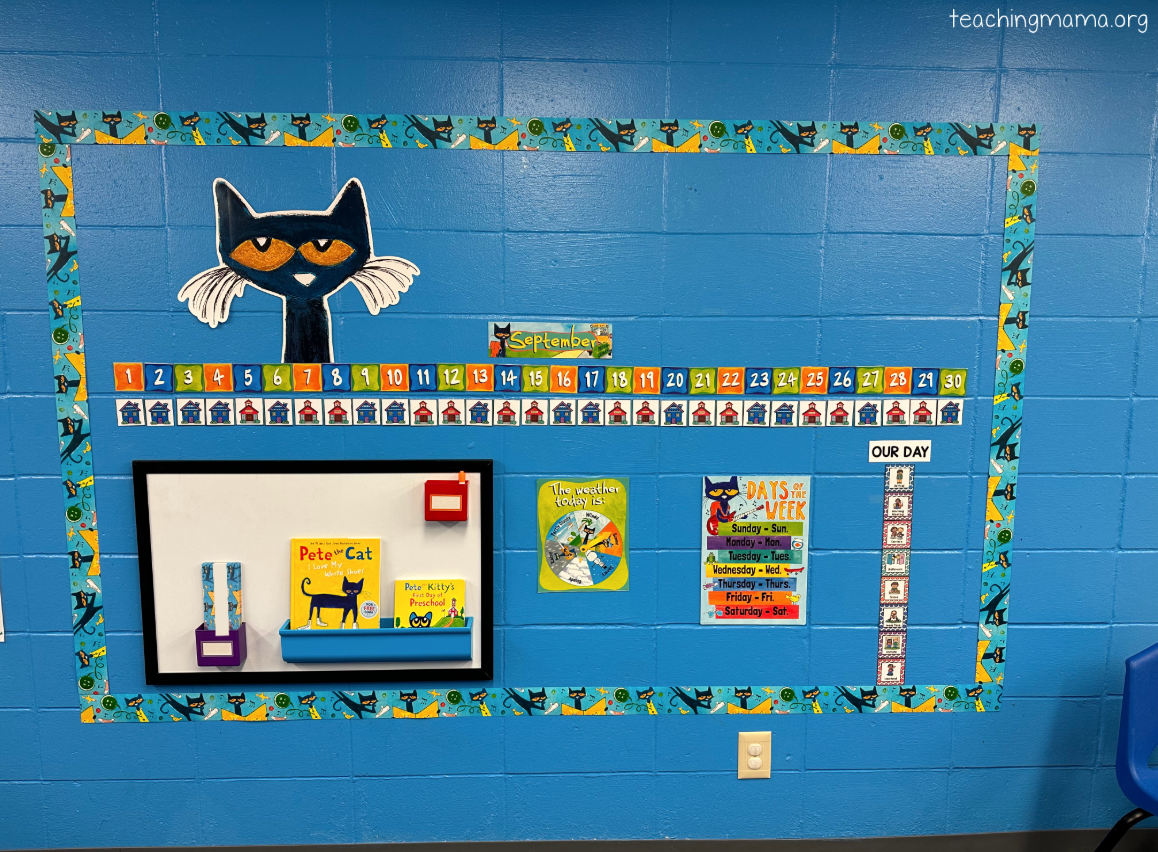
- Calendar or another daily routine
- Read-aloud
- Whole-group learning activity
I love using a sign-in sheet as part of the morning routine because it gives children a natural opportunity to practice name writing. I use this website to customize name-writing worksheets.
I’ve also adopted a linear calendar and found that my students loved being able to visually see where they were in the month.
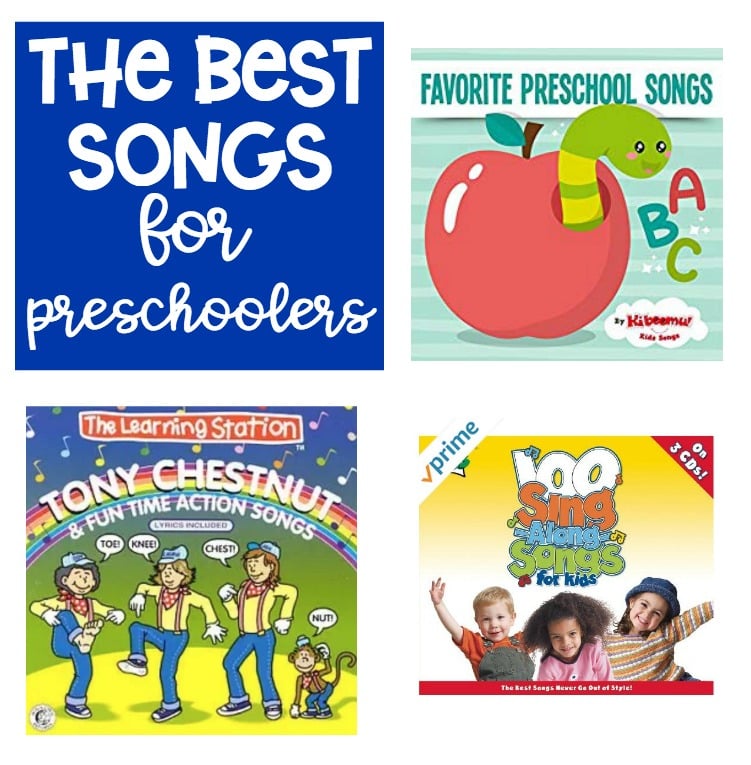
Songs are another simple way to bring children together at the beginning of the day. Here are some of my favorite songs to begin a preschool day.
Midday Routine
Your midday routine might include:
- Snack
- Centers and independent play
- Teacher- or parent-guided learning
- Hands-on exploration
- Outdoor or large-motor play
- Cleanup
When setting up centers, I typically like to have at least one teacher- or parent-guided center while the other centers are more child-directed.
This gives you an opportunity to intentionally teach a skill while children at the other centers are exploring, creating, and practicing independence.
You can rotate through three or four centers depending on the size and needs of your group.
Here are some of my favorite learning centers that combine learning and play.
Afternoon Routine
The afternoon can be a great time for more hands-on and creative experiences.
You might include:
- Art or a structured craft
- Sensory play
- Small-group activities
- Quiet time or rest
- Afternoon read-aloud
- Outdoor play
- Free play
You don’t need to include every option every day. Think about what your children need and choose activities that create a balanced day.
Balancing Learning and Play in Your Preschool Schedule
One of the most important things to remember when creating a preschool schedule is that play is a powerful way children learn. Children are developing skills throughout their entire day.
A pretend grocery store activity can help children practice counting, sorting, communication, and problem-solving.
Building with blocks encourages creativity, planning, and spatial awareness. A sensory bin can support fine motor skills, language development, and exploration.
Instead of separating learning and play, look for ways to include learning opportunities within play experiences. Invitation to create tables are a great way to naturally connect play and learning.
If you’re wanting to learn more about how to incorporate play into your classroom, take a look at my play-based learning course.
Adapting a Learning Schedule for Different Preschoolers
Every family, classroom, and group of children will have different needs. A flexible learning routine allows you to make adjustments while still maintaining structure.
For working parents, a preschool schedule at home does not need to include hours of planned activities. Reading together, cooking, exploring outside, and completing everyday tasks all provide valuable learning opportunities.
For younger preschoolers, shorter activities and more movement breaks may work best. Older preschoolers may enjoy longer projects, group activities, and more opportunities for independence.
The best schedule is one that supports the children in front of you.
Schedules are there to support you, and the best thing about a schedule is that it can be changed. It’s not set in stone!
A simple routine that includes learning activities, play, movement, and quiet time can help create a balanced and enjoyable day.
Whether you are planning a preschool classroom schedule or creating a routine at home, focus on providing opportunities for children to explore, learn, and grow through a variety of experiences.
Your Preschool Learning Schedule Doesn’t Have to Be Perfect
When creating a daily learning schedule for preschoolers, remember that the goal isn’t to fill every minute. The goal is to create a rhythm that gives children opportunities to learn, play, move, explore, and become more independent.
Start with a few predictable anchor points. Add intentional learning activities. Make plenty of room for play. Include movement and quiet time. Then adjust as you learn what works best for your children.
And if your schedule needs to change? Change it!
A preschool schedule is there to support your day, not control it. A simple routine that balances learning, play, movement, independence, and rest can give preschoolers the structure they need while still leaving plenty of room for curiosity, creativity, and fun.
Frequently Asked Questions About a Learning Schedule for Preschoolers
Preschoolers are learning throughout the entire day, not just during structured lessons. Short, intentional activities combined with play, reading, movement, outdoor time, and everyday routines can create a well-balanced learning schedule for preschoolers.
Many preschoolers do best with short, engaging activities. Rather than focusing on a specific amount of time, watch your child’s attention and interest. If they are engaged, keep going. If they’re losing interest, it’s okay to move on.
A preschool learning schedule can include read-alouds, early literacy and math activities, art, sensory play, centers, outdoor play, movement, meals and snacks, quiet time, and plenty of child-led play.
No. Preschoolers benefit from predictability, but that doesn’t mean every activity needs to happen at an exact time. A flexible routine with familiar anchor points can provide structure while still allowing you to adjust based on children’s needs and interests.
Start with the routines that already happen each day, such as breakfast, lunch, snacks, naps, and outdoor time. Then add a few intentional learning opportunities, read-alouds, creative activities, and plenty of free play around those anchor points.