Social-Emotional Strategies for Preschool
If you’ve ever worked with children, you know that preschoolers have big feelings! They can range from joy, excitement, frustration, anger, fear, and everything in between.
At this age, children are still learning how to identify their feelings and express their emotions in healthy ways. As teachers or parents to preschoolers, we have the unique opportunity to guide them through these moments and help them build strong social-emotional skills that will serve them for years to come. Learning to navigate these big emotions in the preschool years will set children up for success down the road.
Managing Big Emotions
When a child melts down over a broken crayon or feels scared during a thunderstorm, it isn’t just misbehavior — it’s communication. Big emotions often show up when a child doesn’t yet have the words or tools to express what’s going on inside. That’s why creating an emotionally supportive classroom is so important.
Below are six practical ways to help preschoolers manage their big emotions with compassion and consistency.
Name the Feeling
One of the most powerful tools we can give young children is the language for their emotions. Instead of saying “You’re okay,” try acknowledging what they’re feeling:
- “You’re feeling really mad because your block tower fell down.”
- “You look sad that your friend didn’t want to play right now.”
- “It’s okay to feel frustrated. That’s a big feeling.”
Naming emotions helps children feel seen and understood. Over time, they begin to use these words themselves, which is a huge step toward self-regulation.
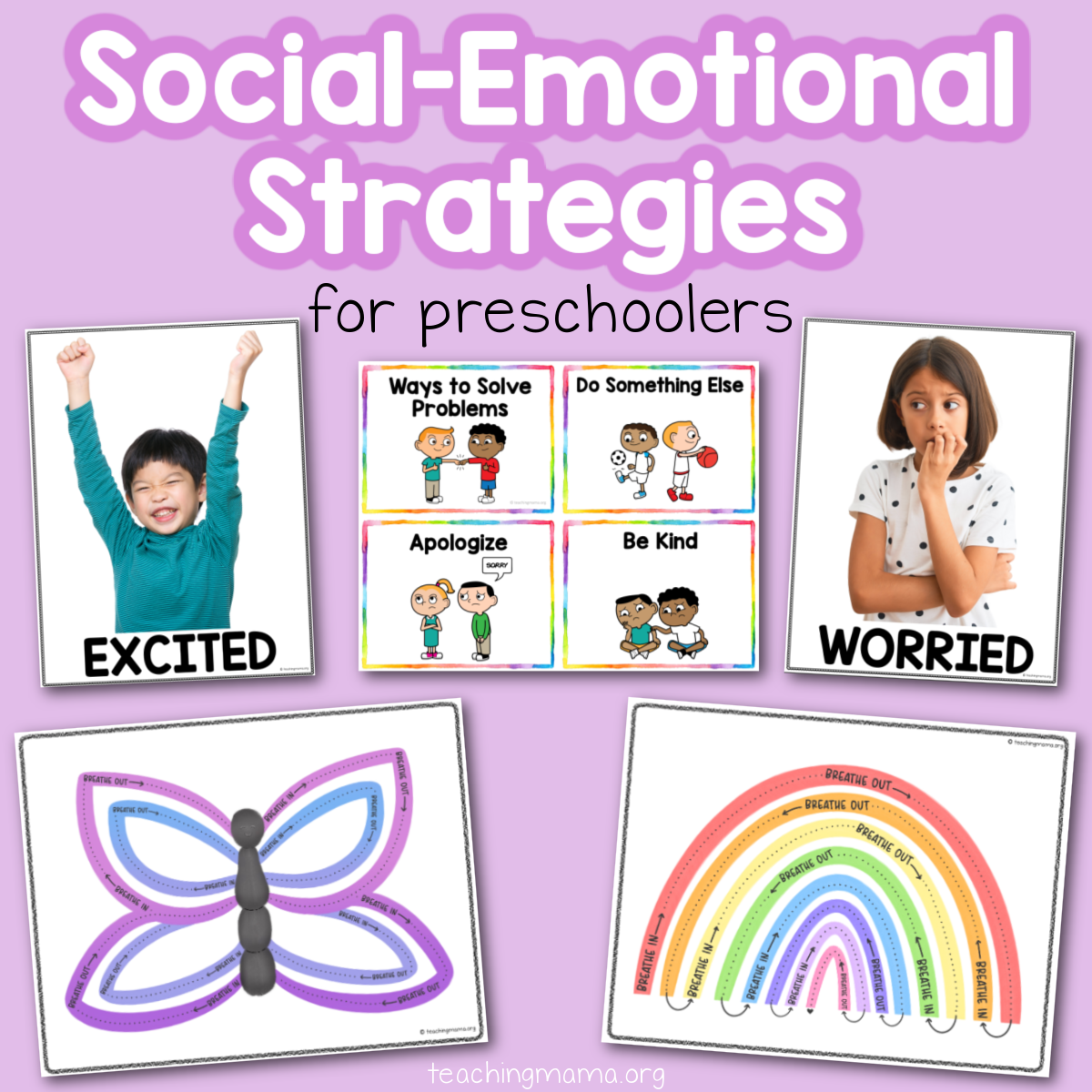
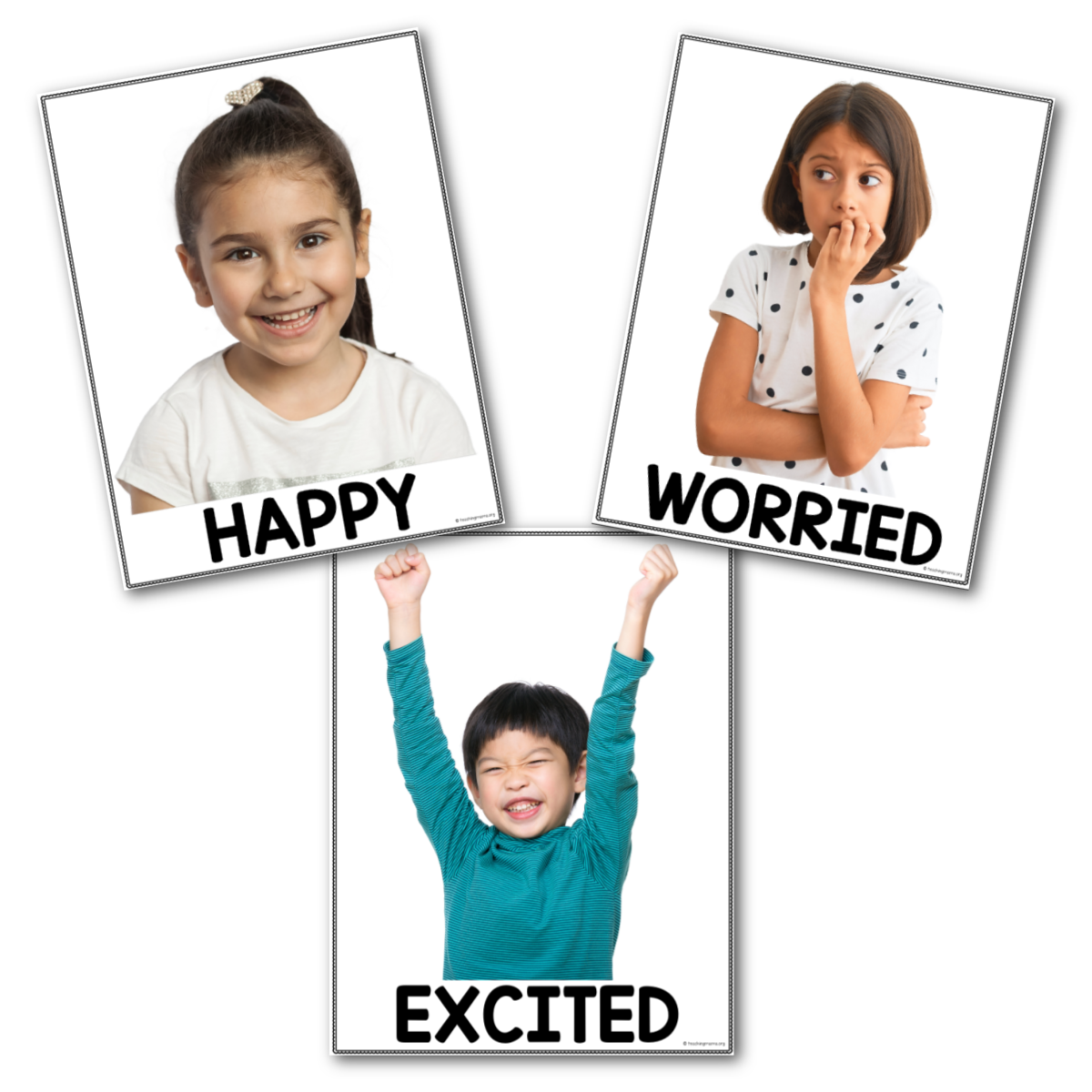
I suggest keeping a set of visual emotion cards in your classroom. Point to them and talk through feelings during calm and tough moments. The picture below shows the printable posters included in The Printables Club.
Create a Calm-Down Space
A calm-down space can make all the difference. This isn’t a punishment or time-out zone, it’s a safe space where children can go to regulate their emotions.
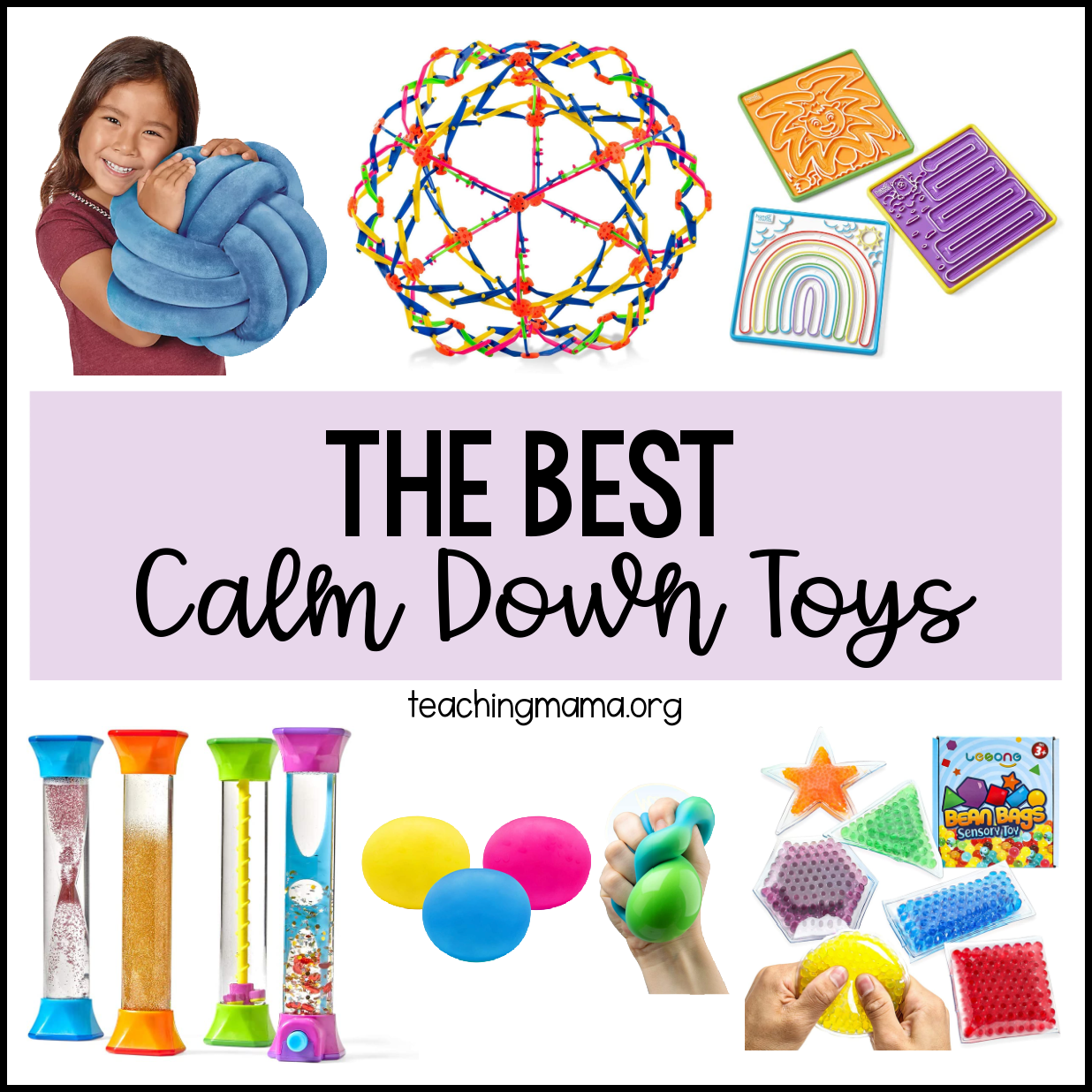
Here are some ideas for a calm-down space:
- Soft pillows or a bean bag chair
- Sensory tools (like stress balls or fidget toys)
- Books about feelings
- A feelings chart or mirror
- A timer or glitter jar to help reset
When students have a predictable, comforting place to go, they learn to self-soothe and regulate their emotions.
Use Simple Self-Regulation Techniques
Young children can learn calming strategies when they’re modeled and practiced regularly. Here are a few favorites:
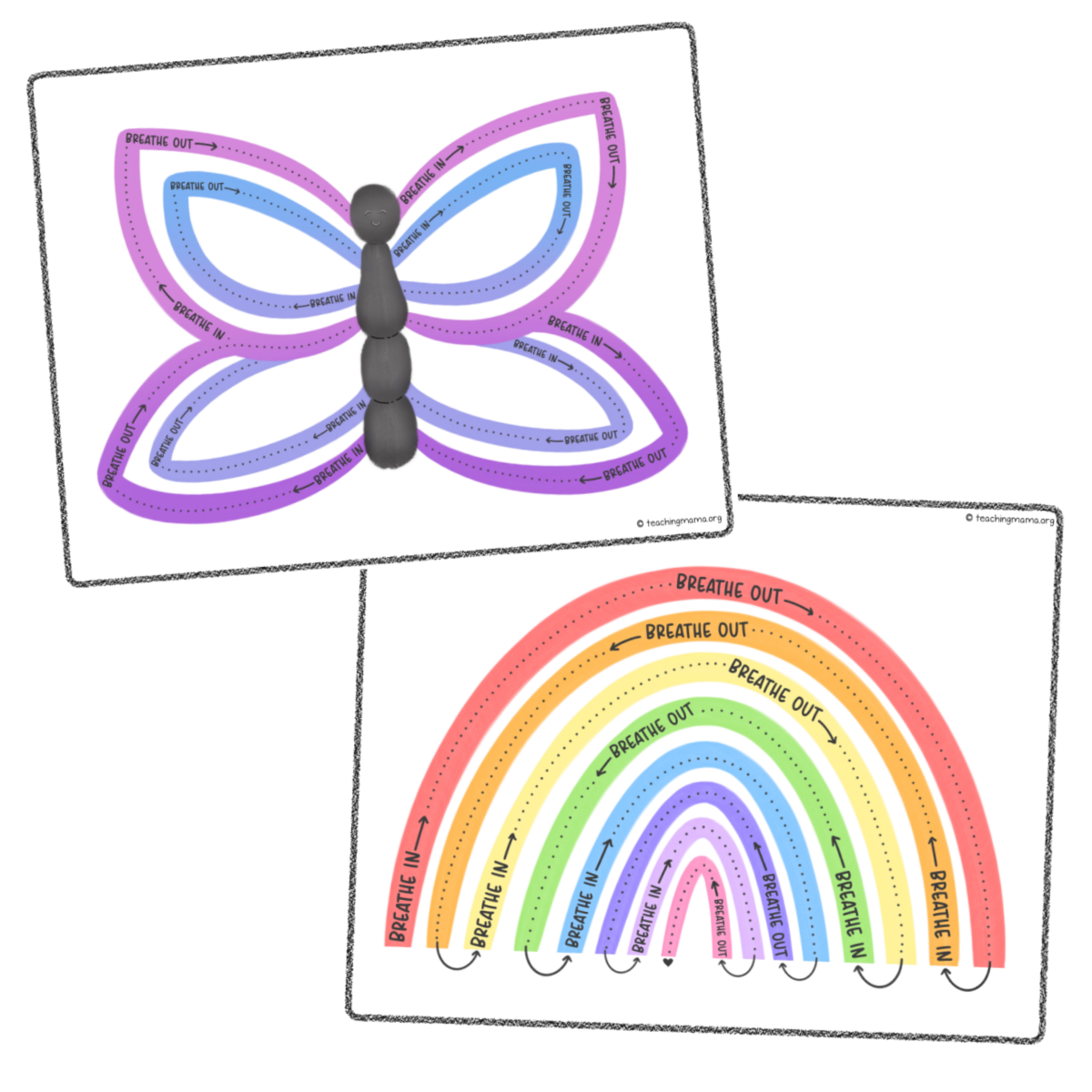
- Belly breathing: “Smell the flower, blow out the candle.”
- Butterfly hug: Cross arms over the chest and gently tap shoulders.
- Counting or stretching: Simple movement can release tension.
Practice these techniques when children are calm, so they’re ready to use them when big emotions arise.
The printable below is a finger-tracing activity included in the Printables Club membership. It’s so helpful for teaching kids self-regulation techniques.
Teach Problem-Solving Skills
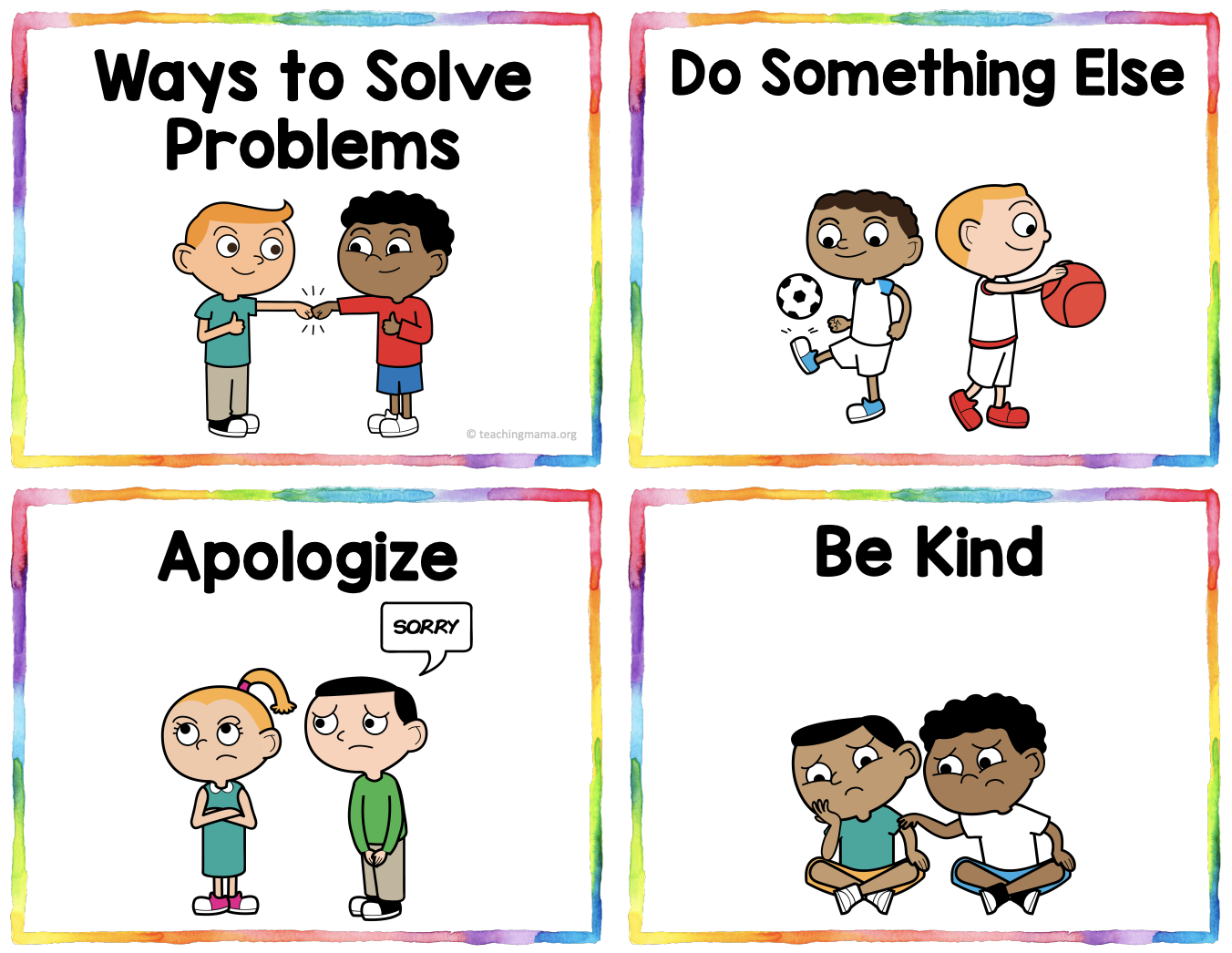
Preschoolers often act out when they don’t know how to handle a conflict or disappointment. Guiding them through simple problem-solving steps builds emotional resilience. For example:
- Stop and breathe to calm down.
- Name the problem.
- Think of solutions together.
- Choose one and try it.
One way to do this is with puppets. You could act out the situation and have the puppets demonstrate following these steps. Preschoolers will love this! Once again, this printable is found on my membership website.
Model Emotional Regulation
Children learn so much from watching adults. When we stay calm and use kind, steady language, we show them what emotional regulation looks like in real life.
Examples:
- “I’m feeling frustrated that it’s so noisy. I’m going to take a deep breath.”
- “I need a moment to think, so I’m going to count to 10.”
When you model emotional honesty in age-appropriate ways, children learn that all feelings are okay, and that there are healthy ways to handle them.
Build Daily Routines That Support Emotional Safety
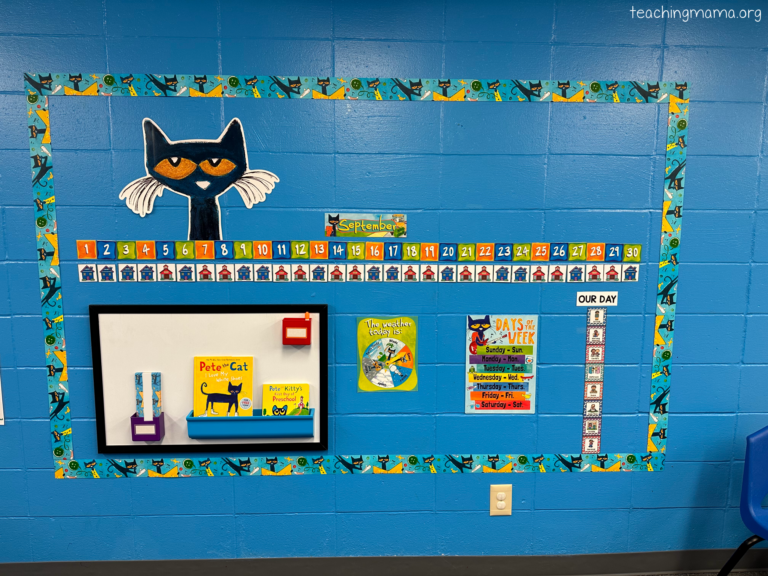
A predictable classroom routine gives children a sense of security, which can greatly help them manage their emotions. Morning meetings, transition songs, visual schedules, and consistent procedures will help kids know what to expect.
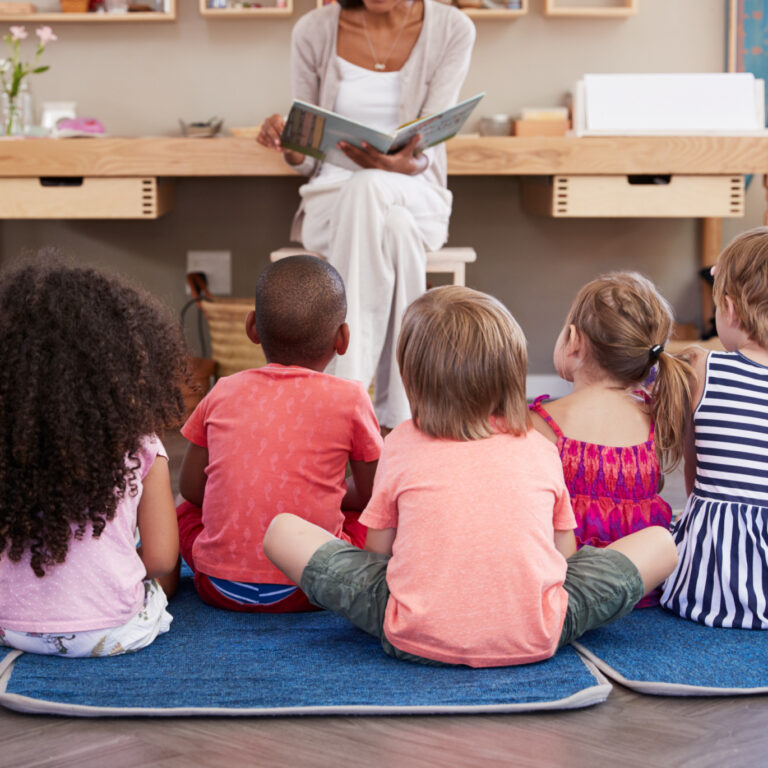
One idea for circle time is to add emotion check-ins to your daily meeting. For example, you could have students choose a feeling card to share how they feel and identify their emotions. If you don’t want to do this in a whole group, you could have students choose a feeling card as they walk into the classroom and show it to you.
Final Reminder
✨ You’re not just teaching letters and numbers — you’re helping shape resilient, empathetic humans.
Big emotions can feel overwhelming — for children and for us. It’s okay to take a breath, step back, and regulate yourself first. Supporting your students’ emotional growth is a journey, not a quick fix. Every time you model regulating emotions or help a child find a solution, you’re helping them on this journey of emotional regulation.