Preschool Movement Games Your Kids Will Actually Want to Play
Stuck inside with preschoolers this winter? You’re going to love these preschool movement games! We all need a chance to get our wiggles out, stretch our muscles, and take a brain break, even when it’s chilly and wet outside. It can be hard to give kids the same kind of gross motor play indoors that they get outside, because there’s simply not as much room. But with these indoor movement activities for preschoolers, you’ll find safe, easy ways to support gross motor development while you’re cooped up for the winter.
Have you ever been so excited for an activity, worked hard to set it up just right, introduced it with enthusiasm, and then watched in disbelief as your children lost interest in minutes? Been there! I dislike the diminishing returns of elaborate setups. It sometimes feels like the more time I put into preparing, the less excited the children are. What’s so great about these gross motor activities is that they’re quick to set up and run, and children actually want to play them. Some of these games were so popular that children were still requesting them months after I first introduced them.
Why Movement Matters in the Preschool Day
Preschoolers are incredibly physical beings. Their emotions course through their entire bodies. They bounce, jump, and twirl while sharing a story. To support preschool-aged children, we need to make room for whole-body learning, including gross motor movement.
When we ask children to sit still, listen quietly, and stop wiggling, it takes up all their focus. Instead of listening to what we’re sharing, they’re thinking only about sitting correctly. It’s so much more equitable (and honestly, way easier for you and the children) to build big body movement into the learning instead. Movement also helps children work through their thoughts and feelings, regulate their minds and bodies, and process their experiences throughout the day. The World Health Organization recommends that 3- and 4-year-olds get at least 180 minutes of varied physical activity spread across the day, so short movement games add up quickly. Learn more about why gross motor skills are important.
How to Set Up Movement Games with Preschoolers
- Keep instructions short: Children need the basic guidelines, and the finer details will sort themselves out as they play. Overloading them with specifics up front can confuse them out of trying.
- Keep the tone light and fun: This is a game, after all! The point is to get their bodies moving and their gross motor skills growing, so following the rules perfectly is secondary.
- Show, don’t tell: Sometimes a wordless demonstration is all you need. Act it out once before inviting the children to join you.
10+ Preschool Movement Games to Try This Winter
Below you’ll find 11 movement games for kids, grouped into four categories. Each category serves a different purpose in the classroom:
- Musical movement games help channel energy through song when your class is getting a little rowdy.
- Chasing and catching games raise the energy and get a quieter group giggling together.
- Cooperative movement games build collaboration and community as children cheer each other on.
- Brain break games are short bursts for transitions or for breaking up a block of focused work.
Musical Movement Games
1. Listen and Move by Greg and Steve
This song is a mainstay for a reason: kids really love it! It’s no-frills, has straightforward instructions, and has an upbeat tune that gets children grooving. There are many songs that encourage children to try different gross motor movements, but Listen and Move is still my favorite. As a bonus, it’s the least annoying of the bunch for adults, so if your class wants to play it over and over, you won’t end up with a headache! For more ideas, check out these circle time songs and winter songs for preschoolers.
2. Musical Statues
Musical statues is such a fun game for eager listening ears. It’s similar to freeze dance, since children have to pay attention while they dance so they can freeze when the music stops, but with the added creativity of turning into statues. Encourage even more gross motor skills by suggesting different statue poses, like standing on one foot or reaching up high. You can use any song you like: an upbeat song for fast dancing, or a slow instrumental to encourage stretching or quiet tiptoeing. You could even pick your own favorite song so you can get your boogie on too!
3. A Round Little Seed
This song was introduced to me by a more experienced co-teacher during one of my first years of teaching. She had such a presence with the children, and one of the ways she built it was through song. A round little seed could be anything, not just a seed! Is it October? A round little pumpkin! Christmas? A round little holly berry! Feeling silly? A round little basketball! The possibilities are endless. What made this song special was the way she took her time with each child so they felt included and noticed. I also learned that while playing music on a speaker is fun, there’s something special about simply singing aloud to children without accompaniment.
How to play: Have each child curl up in a ball on the ground, pretending to be a little seed. Go around to each child and pretend to cover them in dirt by gently patting their back, burying them so they can grow and blossom. Once every child has been buried, sing:
A round little seed grew in the sun
It grew and it grew and it grew to a great, big one
It grew and it grew and it grew for you and me
The biggest flower you’ve ever seen!
As you sing, the children “grow” by slowly standing up and stretching their arms as high as they can. Then have them crouch back down quickly and repeat.
Chasing and Catching Games
4. Scarf Throwing
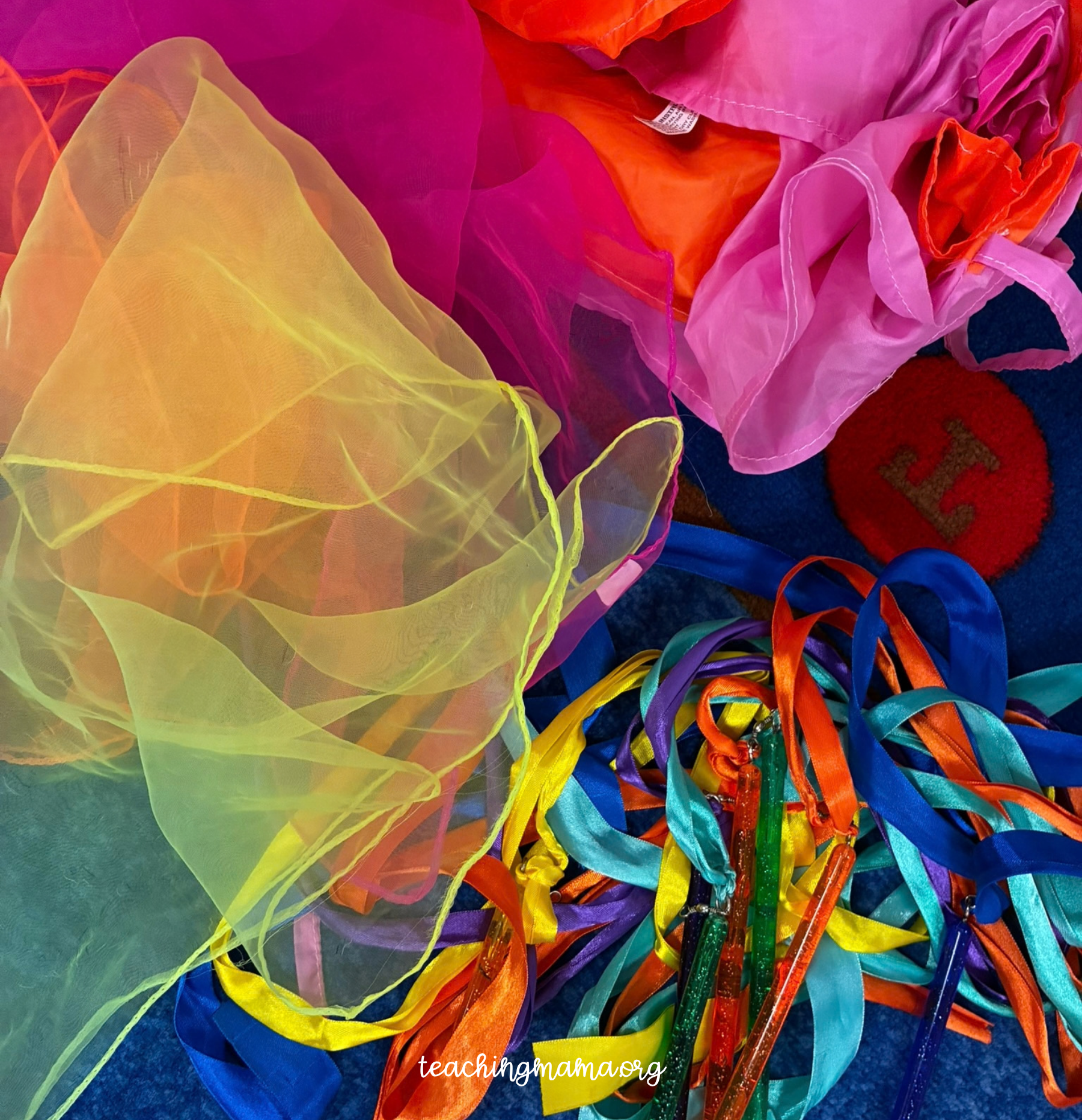
Play scarves are so versatile, and children get really excited about them. They’re perfect for indoor gross motor play because even when children throw them as hard as they can, they float gently to the ground. Here are a few ways to use them:
- Snowball throwing: Have each child ball up a scarf and throw it like a snowball. Chase it, pick it up, and throw it again!
- Scarf dancing: Let children express themselves by moving to music with their scarves. It will look different for each child, and as long as they’re safe and joyful, all movement is welcome!
- Blow with the wind: Pretend a big gust of wind is coming to blow your scarf away! Hold on tight as the wind “blows” you and your scarf to the other side of the room.
5. Modified Duck, Duck, Goose
Duck, Duck, Goose is such a classic, but it can be tricky for preschoolers because of the race back to the open spot, which often ends in tears or a tumble. For a gentler indoor version, have one child pick a “goose” as usual, but instead of chasing, the goose runs (or skips) around the circle to you for a high five, while the first child sits in the goose’s spot. The goose then picks the next goose, and so on until everyone has had a turn.
Cooperative Movement Games
6. Parachute Play
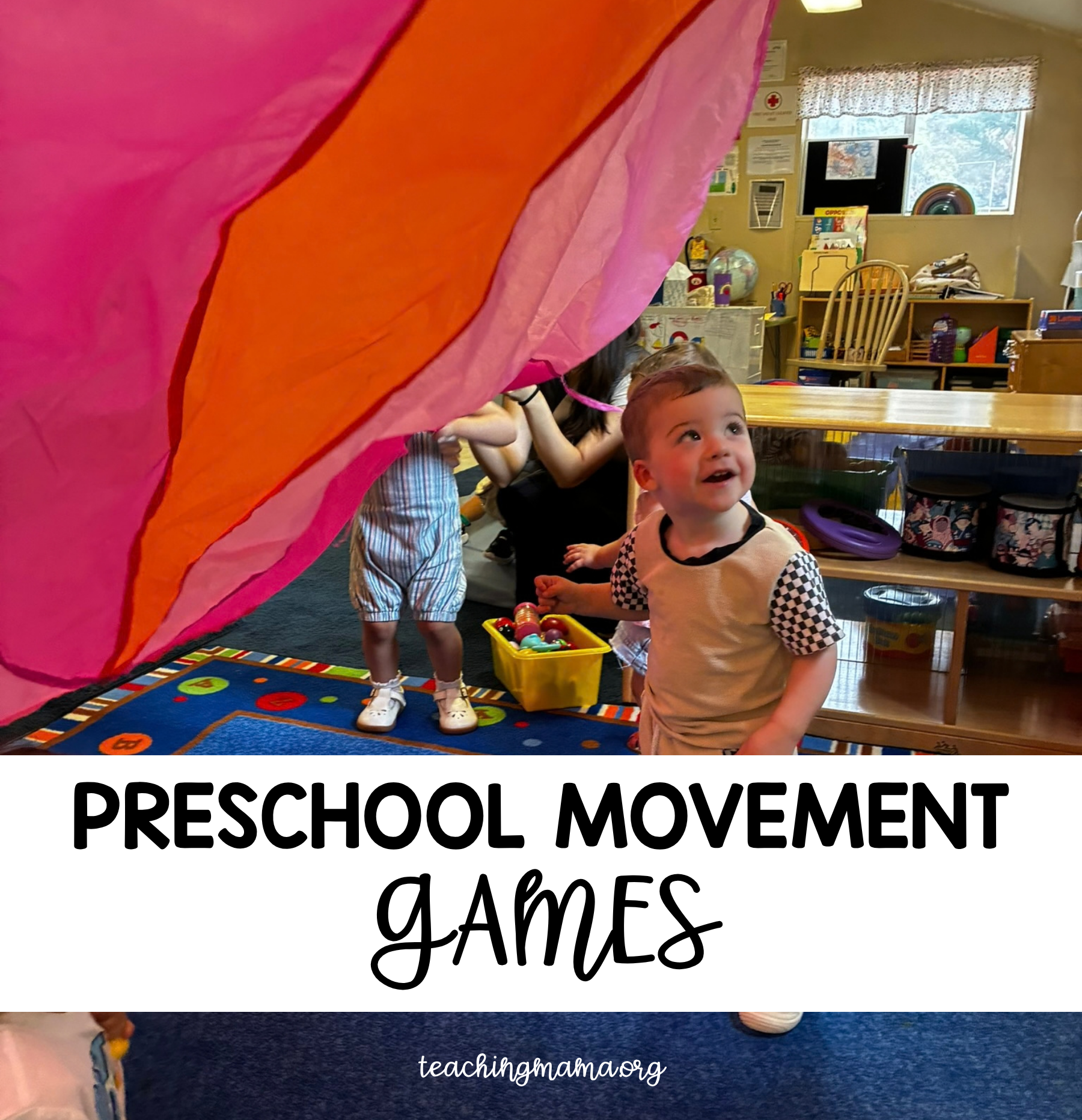
If there’s one thing preschoolers love, it’s the parachute. Keep one on hand for harsh-weather days, and it will keep them busy for a while! Mix it up by adding balls on top to pop like popcorn, taking turns running underneath, or playing freeze dance music so children have to coordinate their movements together.
7. Roll the Ball To…
Sit in a large circle with one ball. Announce who you’re rolling the ball to by describing a feature or characteristic of one child (like “someone wearing a red sweatshirt” or “someone who loves cats”), and let the children guess before you roll it. Tell the children you’ll all work together to make sure everyone gets a turn.
8. Modified Red Rover
Do you remember playing this in school? I definitely do! For preschoolers indoors, skip the part where children run into linked arms. Instead, have two lines face each other, call a child’s name, and have them hop, crawl, or waddle across to join the other line.
Brain Break Games (Quick 2-Minute Bursts)
These brain breaks for preschoolers are perfect for transitions. Want them ready to go? Join our Printables Club for printable movement activity cards you can pull out whenever your class needs a reset. You’ll find more ideas in our brain breaks for kids post, too.
9. Preschool Zoo
Can anyone show me how a penguin walks? What about an elephant? An alligator? After a couple of minutes of silliness, transition back to work by asking to see some kind, quiet preschoolers again.
10. How High Can You Jump?
So simple, but so effective. Just ask them to show you how high they can jump. Preschoolers love showing off their skills! Jumping releases so much energy and activates muscles throughout the whole body, so you know they’re getting good gross motor movement.
11. Willoughby Wallaby Woo
This Raffi song is great for practicing rhyming. Play along by making up your own rhymes and having children search the room for an item that completes them. For instance, “Wallaby wallaby wall, an elephant sat on a…?” The children might find a ball or a doll! It gives them a chance to get up, move around, and take a little break.
Looking for more winter game ideas? Try our snowman bowling or snowman telling time game, and when spring comes around, our spring shape game.
Tips for Playing Movement Games in Small Spaces
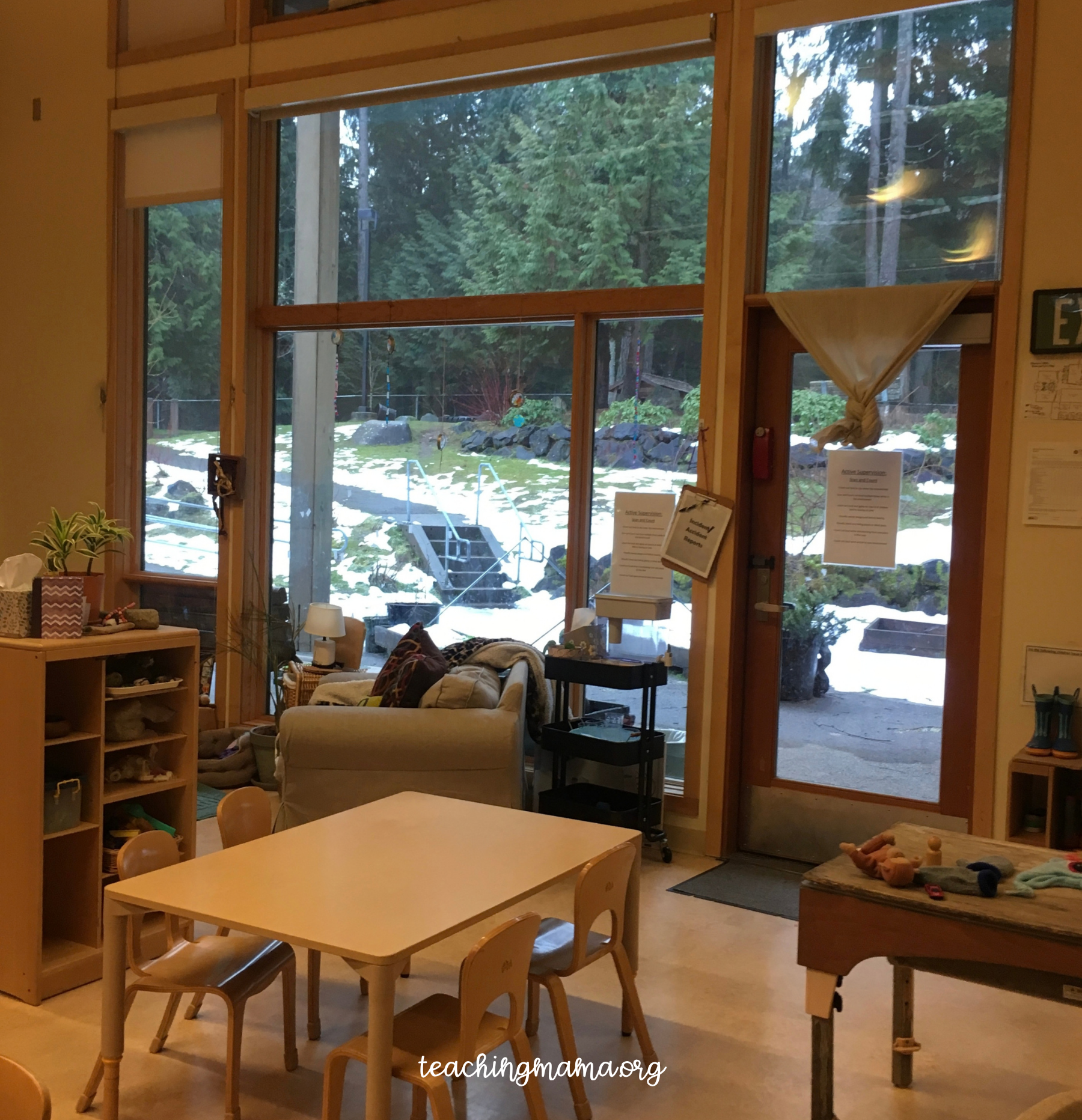
Big body movement in a small space can be tricky, but not impossible!
- Go vertical: If you’re really cramped, choose activities that happen in one spot, like jumping in place, standing on one leg, or reaching as high and as low as they can.
- Take turns with an audience: Have half the class act as the “audience” for a game like musical statues, practicing being a polite audience by watching and clapping, then switch.
- Clear the floor: Push chairs to the edges and move anything children could trip over before you start.
- Try “spots”: Give each child a carpet square or piece of tape on the floor to be their home base for games like Preschool Zoo.
Frequently Asked Questions
Brain break games work best in quick 2- to 5-minute bursts, while bigger games like parachute play or musical statues can last 10 to 15 minutes. Watch your group: stop while they’re still having fun, and they’ll be excited to play again next time.
Many of them, yes! Scarf throwing, A Round Little Seed, Preschool Zoo, and parachute play all work well for 2-year-olds. Keep rules even simpler, play alongside them, and expect them to wander in and out of the game.
That’s okay. Invite them to watch, be the “DJ” who stops the music, or help hold the parachute. Many reluctant children join in on their own once they see how much fun everyone is having.
Set one simple safety rule before you start, like “safe bodies” or “stay in your space.” Use a calm, slower song or a stretching game like A Round Little Seed to bring the energy down before transitioning back to quiet work.
Not at all. Most of these games need nothing but music and some open floor. Play scarves, a parachute, and a soft ball are nice extras if you have them, and a small ball or scarves can be swapped for rolled-up socks in a pinch.
Once you have a few of these preschool movement games in your back pocket, those long winter days indoors get a whole lot easier. Pick one to try tomorrow and see which becomes your class favorite! For more inspiration, browse our free printable games and other preschool activities.